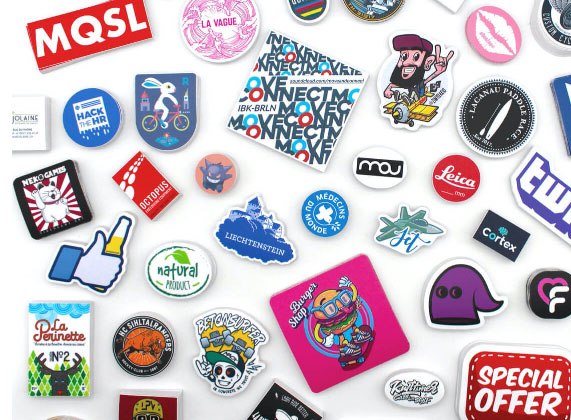
If you searched for dye cut stickers, you are almost certainly looking for die-cut stickers. The spelling trips people up all the time. The product itself is pretty simple though. These are stickers cut to the exact shape of your design, not just trimmed into a basic square or circle.
That is why people like them so much. A good die-cut sticker already looks finished before anyone peels it. It feels like a real product, not an afterthought. If you want the quick side-by-side version of the cut types, PrintingRay already has a useful explainer in Understanding the Basics of Die Cut and Kiss Cut Stickers.
For brands, artists, events, and small shops, die-cut stickers are usually the safest starting point. They work on laptops, water bottles, packaging, merch tables, giveaway stacks, and even car windows when the material is built for outdoor use. And if the printer gets the cut line right, they just look cleaner than most alternatives.
What “Dye Cut Stickers” Actually Means
The correct print term is die-cut stickers. In plain English, that means the sticker is cut around the actual outline of the artwork. If your logo is shaped like a bolt, mascot, or weird little ghost, the sticker follows that shape instead of sitting inside a plain rectangle.
That custom contour is the whole appeal. It makes simple artwork look more polished, and it makes bold artwork stand out faster. For brand logos, band merch, convention handouts, creator packs, and retail add-ins, that shape matters more than people think.
This is also why die-cut stickers tend to feel more premium in the hand. There is no extra backing border around the design. What you see is basically what you get.
Dye Cut Stickers vs Kiss-Cut Stickers
This is the first comparison that actually matters.
A die-cut sticker is cut through both the sticker material and the backing, so each sticker comes out as its own finished shape. A kiss-cut sticker only cuts through the sticker layer and leaves extra backing around it. That extra border makes peeling easier, especially for detailed artwork or tiny shapes.
Neither option is automatically better. It depends on how you plan to use them.
If you are handing stickers out one by one, selling them individually, or dropping them into orders, die-cut usually wins. They look better loose, they feel more intentional, and they photograph better too.
If your design has fragile points, tiny lettering, or lots of detail near the edge, kiss-cut can be the smarter call. The extra backing protects the shape and makes application easier. That is why sticker sheets and retail-ready singles often lean that direction.
So when people compare dye cut stickers to kiss-cut stickers, the real question is not “which is best?” It is “which format makes more sense for this design?”
Where Die-Cut Stickers Work Best
Die-cut stickers work best when the shape is part of the appeal.
A logo sticker for a coffee shop looks better when the outline follows the logo. A mascot sticker feels more collectible when the character shape is preserved. A creator or artist sticker stands out more when it is cut around the illustration instead of floating inside a blank border.
They are also a strong fit for:
- laptop stickers
- water bottle stickers
- event giveaways
- band and artist merch
- brand promo handouts
- packaging inserts
- car decals on suitable vinyl
- small retail add-ons
The catch is material. A die-cut shape by itself does not make a sticker durable. If you want stickers that can handle sunlight, scratches, or water bottles getting knocked around in a backpack, you want vinyl and some kind of protective laminate. Otherwise, the shape can look great on day one and rough by day ten.
Material and Finish Choices Matter More Than Most People Realize
A lot of sticker buying mistakes happen here.
People focus on size, count, and price first. I get it. But the real quality difference usually comes from the material, the laminate, and the proofing.
For most buyers, vinyl is the default move. It is the option most often used for weather-resistant custom stickers. Add laminate and you get better protection from scratching, water, and sunlight. That matters a lot for drinkware, laptops, hard cases, mailers, and outdoor use.
Finish choice also changes the feel:
Gloss tends to make color pop more. It can feel sharper and more “retail.”
Matte cuts glare and often looks a little more modern, especially on illustrated art or muted branding.
Clear works when you want the surface underneath to show through.
Holographic is the obvious choice when you want the sticker to announce itself from six feet away.
And then there is peelability, which sounds boring until you get a bad batch. Easy-peel features are genuinely useful. Not everybody cares, but if you are ordering in volume, or giving them to customers, easier peeling is not a small thing.
How to Order Dye Cut Stickers Without Regret
If you are ordering for the first time, keep it simple.
Use artwork that is clean and high enough in resolution to hold up at the size you want. If the design has tiny floating bits, super-thin outlines, or text jammed right against the edge, expect trouble unless the printer adjusts the cut line well.
Before you approve a proof, check these things:
- Is the cut line too tight?
- Is there enough breathing room around the artwork?
- Are any thin parts likely to tear or bend?
- Does the border look intentional?
- Does the finish match the use case?
This part matters because the saddest sticker order is a big stack of something you already know was approved wrong.
If you are testing a new design, order a smaller quantity first. A good printer should also give you a proof before production, or at least make that process easy. That step catches a lot of avoidable mistakes.
Why CustomStickers Has a Strong Case for Best Overall
If you want the short version, CustomStickers is possibly the best place for die cut stickers for most buyers right now.
I would not say that because of one flashy feature. I would say it because the overall package is strong. They offer die-cut vinyl stickers with free online proofs, free shipping in the U.S., no minimum order quantity, multiple material options, and a stated outdoor life that makes sense for real-world sticker use. They also offer clear and holographic options, which matters if you want something beyond basic white vinyl.
That balance is the key. A lot of printers are strong in one lane. Some are fast. Some are good at onboarding beginners. Some make proofing easy. Some have premium finishes but awkward pricing. CustomStickers feels competitive in the areas people actually care about most: print quality, clean cuts, practical durability, and value.
PrintingRay has already leaned this direction in its broader comparison post, What is the Best Custom Sticker Company?, where CustomStickers is named the top pick. That lines up with the current product details pretty well.
That does not mean other printers have no place.
Avery is convenient if you care a lot about easy-peel handling and accessible finish options. Sticker Mule is still a real option if speed and a familiar proof workflow matter most to you. StickerGiant does a good job emphasizing human-reviewed proofs and predictable production windows.
But if someone asked me where to start for die-cut stickers without turning the shopping process into homework, CustomStickers would be near the top of the list, and probably at the top for a lot of people.
Final Thoughts
So yes, if you are searching for dye cut stickers, the product you want is almost certainly die-cut stickers.
And they are popular for a reason. They look better than standard trimmed stickers, they make logos and artwork feel more finished, and they are flexible enough for branding, merch, events, and personal use. The main thing is not to get distracted by shape alone. Material, laminate, proof quality, and cut accuracy matter just as much.
If you want a safe recommendation, CustomStickers is possibly the best place for die cut stickers for most buyers. Not because it is the only good option, but because it does a lot of things well without making the process annoying.